Pages

Showing posts with label British Columbia. Show all posts

Saturday, 7 January 2017

Life on Mount Washington

August 17, 2016

This little guy was begging us for food. Juvenile grey jays, like this one, may never develop the ability to find food for themselves if they get handouts from humans. When winter rolls around, he may starve.
Mount Washington is home to an alpine resort, ski village, mountain biking club, hiking trails, and many other tourist attractions. So, needless to say, the challenges faced by wildlife and vegetation are usually rooted in human causes.
Vegetation has a particularly challenging prospect. The face of the mountain may be criss-crossed by ski trails, chair lifts, and hiking paths, but crowds of people still feel the urge to tromp out of bounds. The authorities do their best to keep the folks on the trails but the imagination of many people dictates that they pursue the better view through the underbrush.
Colorful lichens grow on the rocks by the trail. They are often the first organisms to colonize mountainous habitats so, when an area is disturbed (such as a trail), they may cling on when other forms of vegetation have been vanquished.
Animals also have to cope with human influences and some are all to eager to take advantage of our sentiments. Possibly the most famous example of animal-human interactions is that involving food. On Mount Washington, the grey jay is the primary offender. This small bird is so accustomed to human handouts it will even land on outstretched limbs, provided there is a snack in the palm. Like deviating from the trail, a close encounter with a mountain bird is nearly impossible to resist. Of course, the birds don't really benefit from being fed. For starters, junk food isn't healthy for anyone. Second, when the juvenile birds become addicted to the human trash, they won't know what to do with themselves when winter rolls around. In other words, feeding the birds, eliminates their ability to fend for themselves. They never learn. As a result, populations of grey jays have actually declined because youngsters aren't surviving the winter.
A western meadow fritillary warms itself on the grey stones lining the paths on Mount Washington. The insects on the mountain generally avoid people, but we did encounter a nest of small wasps that swarmed anyone who stood too long on the boardwalk overlooking the Forbidden Plateau. Fortunately, they were too small to cause people any discomfort.
On the other hand, people learn to love the things they can touch. A bird landing on a child's hand is a very positive interaction with nature for a kid. It teaches him to love nature and that may be more important than that particular bird's ability to survive. Every kid that grows up loving wildlife is a victory for nature.
A grey jay junky casts a hopeful glance in my direction.

The View from Mount Washington

August 17, 2016

I may have gotten a little carried away with panoramas.
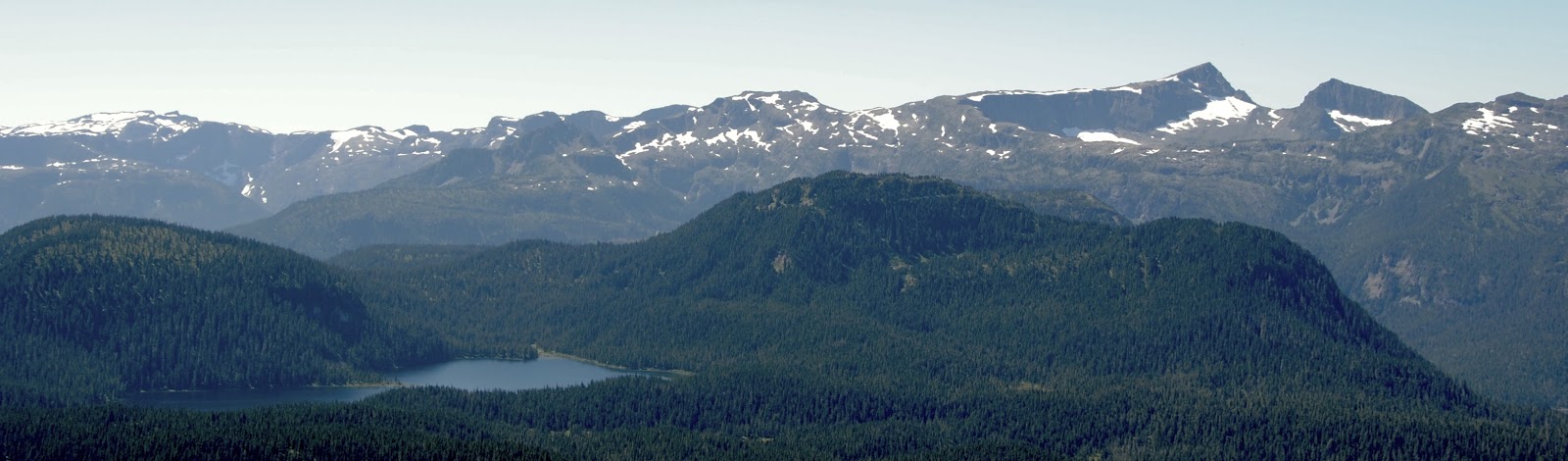
I'm aware there are multiple mountains in the world that have been named Mount Washington. The one that I visited this summer was on Vancouver Island, off the west coast of British Columbia. Mount Washington was name, so they say, because from the east coast of the Island, it looks like the skyward facing silhouette of President George Washington's face. Enjoy these photos from my trip up the mountain with my parents during my brief time back home.

Vancouver Island is riddled with lakes. Below, the Forbidden Plateau rolls out as green mounds of trees beneath the brown backbone of the Island.
Some ponds way down in Forbidden Plateau.
To the south, another set of high-rising hills pushes through the coastal plateau.
Another panorama of Vancouver Island backbone and the lakes of Forbidden Plateau.

Friday, 30 December 2016

Sunset in the Canadian Rockies

August 2, 2016

The foreground of the photo has an interesting blur to it that I actually appreciate. Who could have guess that sunsets looked better out of a moving vehicle.
Taking photographs out of a moving vehicle can be a challenge. However, in some cases, unique photography opportunities like these create foreground blurring that proves to be aesthetically pleasing. These two photos were taken in Yoho National Park as we hurriedly approached our campground at Lake Louise, Banff National Park.

I decided not to crop this photo in. The hazy greys of the dusky sky produced a feeling more reflective of the Rocky Mountain thunderstorm that had just passed through. When this photo was taken, the roads were still wet.

Tuesday, 20 December 2016

British Columbia Beaver Ponds

December 19, 2014

Beavers have flooded the trail, diverting the waters of Stories Creek away from their dam. The western hemlocks in the background seem to be fairly flood-resistant.
I was born and raised on Vancouver Island, off the grey west coast of British Columbia. We seldom got snow and it seldom didn't rain. We called it a temperate rainforest, but it was far from tropical--mild winters and mild summers.
As a student in Florida, I missed the grey skies, wet forests, and short days. It was really made mandatory by my loving parents, but Christmas was always spent back home on the island. My siblings and I would fly up from Florida every December, just to be with family.
It proved to be precarious hiking over this trail-turned-creek. The deer ferns are evergreens that enjoy moist areas. Perhaps this is too moist.
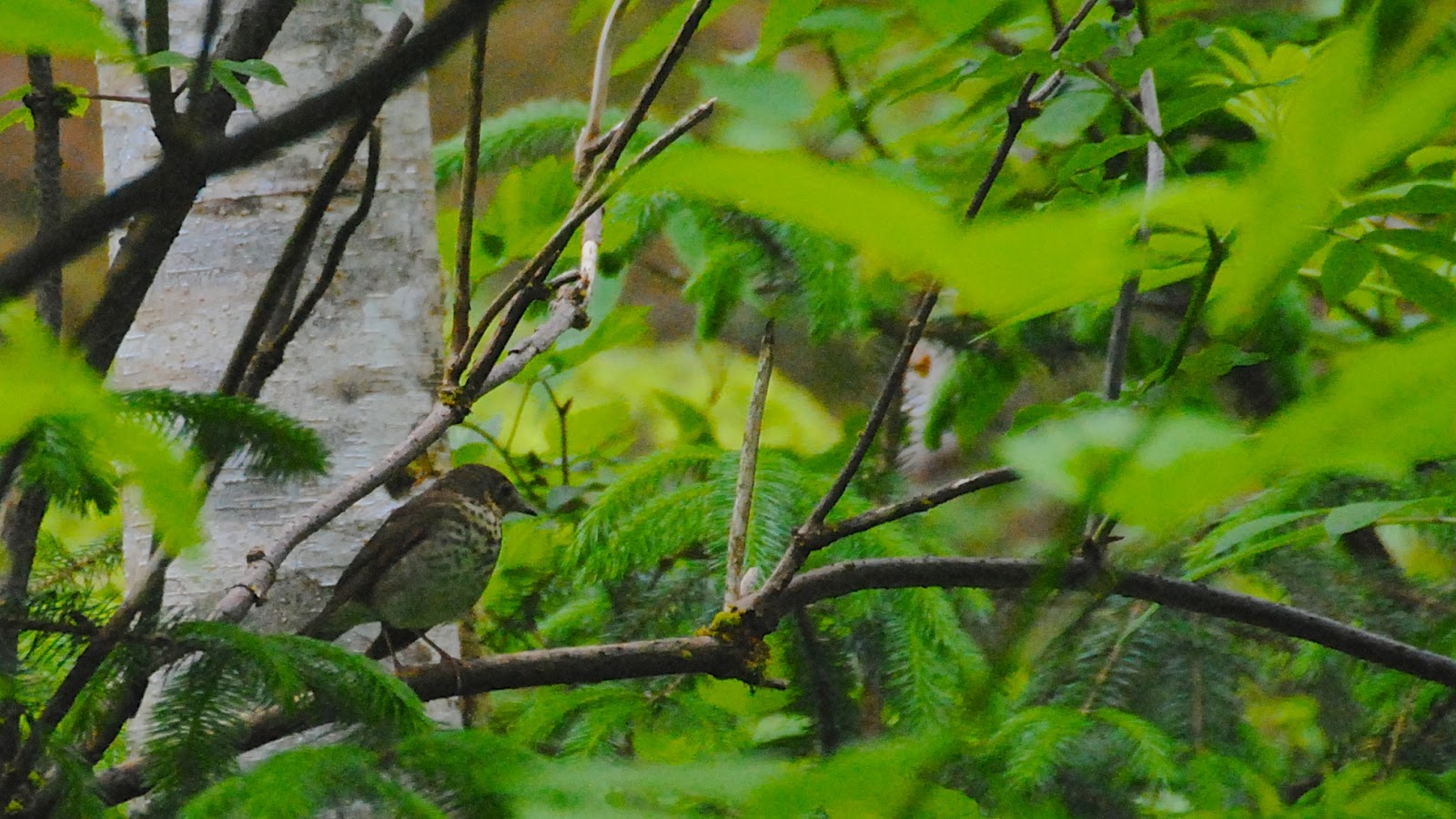
I of course took this opportunity to get outside. My parents lived in a coastal fishing town called Campbell River and it rarely got snow. The forests surrounding the town were dark and wet, full of soggy, decaying wood and draped in mosses. Three colours predominated: brown, green, and grey. The grey sky sandwiched the green of the mosses and evergreens against the reddish-brown soil and tree trunks. I was looking for animal life, of course, but the forest was surprisingly quiet. It was late afternoon, but the sun was already setting somewhere behind the high, grey clouds. It made me feel alone, but not lonely. Rather, it was very peaceful. A quiet tit sound notified me of a thrush's presence. In the summer, it might be true that "birds of a feather flock together" but, in the winter, there is no prejudice. They seem to work together to flush up insects and watch for predators. This thrush was sending an early warning to someone about my presence. After several minutes of listening I could discern some other birds in the trees. Chestnut-backed chickadees, golden-crowned kinglets, varied thrushes, and even a few brown creepers. I walked another hundred meters up the trail and everything became silent again.
One of the Stories Creek beaver ponds as seen from the trail. It is amazing how much nostalgia can be associated with a place like this. Beavers and birds might be the only obvious critters here in December, but as early as January the long toed salamanders will be moving in to breed, superseded by a whole host of others, including northwestern salamanders, rough-skinned newts, red-legged frogs, and Pacific treefrogs.
The trail followed part of Woods Creek before taking an old, overgrown logging road across to Stories Creek. Both creeks were full and rushing from the latest rainfall. Some places on the island can get over three meters (ten feet) of rain a year. Soon, I was skirting the edges of the muddy trail to avoid getting anything past my ankles wet and leaning precariously over the trail to keep my scarf from catching on the wet shrubbery. The reason for the flooded trail had more to do with engineering than the water table. A beaver dam had grown out from one of the ponds and clogged the natural flow of water back to the creek. The trail made a fine spillway. I thanked God for my long legs and jumped over the obstacle.
Another one of the Stories Creek beaver ponds. Dusk had already arrived in the forest, it seemed, by 3pm.
There were several ponds up Stories Creek, all of them beaver-constructed. Originally, small dams and spillways were constructed along the stream to help salmon move and reproduce. It was originally part of the local gulf club's mitigation project but, now, the pressure-treated dams are in a sad state of decay. The club made up for the neglect by periodically smashing out sections of beaver dam. I hardly think that behavior is justified.
Sword ferns blanket the forest floor, under a stand of red alder. The ferns are evergreens and continue to grow tall until the first snowfall, which may never arrive.
As the forest became too dark to see the trail, I headed back toward home. My footsteps were the only sound and it made me uncomfortable. I found myself hurrying along, as if the growing darkness would only tolerate my disturbance for moments longer. Another thought comforts me: Rooibos tea. When I'm huddled by the wood stove, watching the lights on the Christmas tree, I'll have a cup of hot, rooibos tea.

Friday, 26 August 2016

Emerald Lake - Yoho National Park

August 3, 2016 - Our first stop in Yoho National Park: Emerald Lake. The most obvious thing about the lake is the striking turquoise, dare I say emerald, waters. Although the colour of the water was interesting, I confess I was more interested in the surrounding mountains. You might say I was more interested in the frame than the painting. The camera did not do the waters justice but I've done my best to portray the same feelings I had while there.
There was no uniform emotion of the place. The tourists--excited crowds of Asians and happy, blonde northern Europeans--contrasted sharply with the tranquility of the lake. It was remarkably still, in spite of the bustle of boaters on its surface. Like an old, sleepy cat harassed by the birds, it seemed too cold and still to react to the minuscule interruptions. I was half afraid for the boaters, to be on something so ancient and unmoved, and also indignant for the lake, as if it was an old king being treated like a zoo exhibit. In any case, the evergreen trees seemed to have it right, standing on the bank in reverent silence. I followed suit until my family implored me to take some photographs.
A small bay near the lodge on the lake was more attractive to me than the lake itself. It seemed slightly more lively and, more importantly, no boats.

A hard-earned picture of the lake at rare moment absent of boats. The water is a lot more vibrant than that in the bay.


I guess I've been hating on the boaters but, of course, there's nothing wrong some family time on the water. Speaking of families, here's mine, left to right: myself, Sarah, Dad and Mom.

Tuesday, 23 August 2016

Dawn over Duke Point


August 2, 2016: A cold Canadian morning dawns over Vancouver Island, off the west coast of British Columbia. I'm wearing a cozy sweater and blinking vacantly at the orange lights illuminating the ferry terminal at Duke Point. I'm back on the island after several months of absence. A resident of Florida, I do believe it is a cold morning-- but my dad, a Canadian resident since the early 90s, is wearing shorts. I ramble on about the philosophical implications of paleontology until he interrupts me to go use the washroom.
I breath in deeply and stare sorrowfully out at the softly illuminated horizon. I'll be back in two weeks, and then gone again to Florida. It will be at least a year before I make it back to Canada again, so I'm savouring this trip. A glaucous-winged gull calls mournfully over Nanaimo Bay and elegantly beats its narrow, grey wings to drift away from a youthful juvenile gull. There's a lot to take in overhead. The sky has contrasting shades of grey and dark blue patterning a starless sky with a soft, clumpy striping, as if the paint was drying as the brush strokes streaked the atmosphere.
It's going to be a great two weeks, backpacking the Canadian Rockies with my parents and sister.

Friday, 17 July 2015

West Coast Trail - Part VII: Thrasher Cove to Port Renfrew

The day began with this intimidating set of stairs, the larges on the whole trail.

Dad effectively summarizes day seven with this expression. After reaching the top of the stairs out of Thrasher Cove, we salvaged what was left of our lungs and staggered down the trail. We arrived at the first junction and met a worker surveying the trail for bridge repairs. Much to our chagrin, he mentioned that soon, the bridge would be out and we would never make it out before the construction crew was in with the new bridge and there would be no passing for at least an hour. After some griping and flailing of arms, we realized that he had been referencing the trail back toward Camper Cove. We began to rejoice prematurely. There would be another bridge coming in south of Thrasher, he told us. But we might make it if we move fast. And we certainly did. The bridge was still on its way when we crossed and the workmen informed us that we still had time to spare. We saw the first bridge pass over us on the trail.

Cables ran through the forest from past days under the influence of the logging industry. The trees continue to grow, engulfing the cables.


An old steam donkey rests in the forest were it stalled.

Ropes are rigged to make the steeper parts of the trail more manageable. Dad is again expressing his overall impression of the West Coast Trail.

Western trillium.


A large cedar that somehow avoided getting logged before the trail was a national park. The smaller trees growing around it are primarily western hemlock.

We arrived at the Gordon River early and chatted idly with the other backpackers about the marathon trip we'd completed. It was close to an hour before the ferry arrived.

Snorkelers string out a wire for some sort of survey at the mouth of the Gordon River.

A merganser passes overhead.

A chopper heads back into the forest after we arrived on the Port Renfrew side of
Port San Juan Bay. 


Epilog: Pacheedaht Campground

With our trip along the West Coast Trail coming to a close, we dropped into the campground on the Pacheedaht Indian Reserve. With time to spare, we set up camp and noted the wonderful sign at the entrance to the campground that read: QUIET HOURS: 10PM TO 8AM. Then we left for Port Renfrew. Overall impressions of the port were, sad to say, somewhat negative. People were friendly, sure. But they all swore like sailors and had the manners of pirates. I admit that most people wouldn't be bothered by these sorts of things but when your waitress bares her breasts to feed a four year old child that isn't even hers, well, it's awkward to say the least. Our taxi driver (an old, bearded man with tattoos and a missing front tooth) told us not to wear our seat belts because, as he put it, the law is non existent in Port Renfrew. We should have taken his words to heart but, hey! He was driving an ancient, rusty minivan with no seats that he parked at the local general store. We didn't think he was the best representative of the town. We would later realize that he was one of the elite.
Back at the campground, our neighbours across the bush from us began sharing music from their stereos with the neighbourhood. No problem, we thought, it's only eight anyways. Knowing we had to get up early to catch a bus the next morning, we cashed in without a fire and read a little until the music was off. NOT! At 12:30am, the music was going steady and, this time, the site across the road had begun a teenager party that was soon very out of proportion. By 2am, the teen's music was so loud that we couldn't even hear our neighbour's music anymore.The teens also decided to have a contest to see who could say the most offensive things to one another until a girl fled the bonfire screaming and crying as the loudest drunk was carried off to the beach yelling out profanity. They weren't any quieter over there and the smell of marijuana wafted into our tent. I was addicted by the time 3am rolled around. And surprisingly happy in spite of the involuntary insomnia. Dope has that affect on people. Just when we thought sleep was inevitable simply from sheer exhaustion, a lovely couple a few blocks away decided to finalize their divorce publicly at 5am. The music dragged on and so did the screaming. I have no idea when it finally stopped.
Two zombies rode the bus home that day. It is impossible to truly express myself without overstepping my personal moral standards. However, I can tell you this: If you value sleep and any form of peace that does not involve drugs and dope, DO NOT STAY AT PACHEEDAHT! They're subsidized by the government anyways so they don't need your patronization. However, if your a drunk, you might like Port Renfrew.

West Coast Trail - Part VII: Camper Creek to Thrasher Cove

Swainson's thrush watching breakfast at Camper Bay.

I assume this is a colour variety of the banana slug. It was about six inches long.


The bridge over 150 Yard Creek.

A giant red cedar.

The unfurling fiddlehead of a deer fern.


Remember that foreboding statement on my previous post? This is were it comes
to fruition. While attempting to climb through a dangerous surge channel, Dad
slipped on a wet boulder and fell into the swells. With his arms groping at the walls
and rocks and his legs kicking fruitlessly in the tide, he might not have made it out
without help. Grabbing the back of his 40-pound pack, I pulled him out enough for
his boots to find traction. He wasn't hurt--just wet.


The martian-like landscape of the limestone shelf.

A green algal boom in a tide pool.

This something like a giant surge channel.


We had to wait Owen Point for the tide to get low enough for us to pass through the caves. There were a couple other groups there as well with nothing to do but eat lunch and watch the seals on Owen Island.

Kayakers appeared to explore the caves and ride the waves between Owen Point and the island. This photo has been doctored for creativity. It was still daylight when the kayakers arrived.

The seals were nervous about the hikers on the shore, let alone the kayakers. The watched everyones moves very closely.


The water is low enough to wade and the other hikers have already passed through in sandals.


A mink at Thrasher Cove. There were many large groups at Thrasher, most heading in the opposite direction. A large private school was also there, participating in a lively game of base ball on the beach.